Showing posts with label Bread. Show all posts

2014-01-10

Nothing from the Pacific - yummy Scotch buns

Does anyone remember humble beginnings of our blog? Me and Gosia, we were so much younger (but not as attractive as young mums can be). We both loved cooking. Gosia was fighting with her English language nightmare. I was crazy about breads, sourdough and kneading. I was crazy till last year. Then I was advised to go on a gluten-free diet. That was my kind of nightmare. Yes, I love plenty of other foods but I really missed the wheat and rye stuff. Now I can have a little rest from this restriction. I took out the best ever The Bread Book by Linda Collister. I've made the favourite buns of my husband and they were so perfect! So delicate, with this special smell of the yeast dough. Absolutely divine.
 

My dear breads, doughnuts and cookies, I have never betrayed you! Yours forever, Ilona.  

2013-07-25

New Kid on the Block - shelal cheese

Quite often new exotic ingredients come into my kitchen. I would like to familiarize you with them. Probably some of you will have more ideas on their use - so feel free to share your ways. 


Today I present shelal - a cow's milk cheese from Syria made into form of strands. It is very salty so it would be a good idea to rinse it under cold water - but only for few seconds. If you leave the cheese in water, it will loose all its stiffness. This cheese is great for decorating salads and open sandwiches.

My canape: gluten-free bread, home made houmous, baby spinach leaves, slice of ham, shelal with nigella seeds, broccoli sprouts, New Zealand's Grove (Greencado) avocado oil.  

Another interesting ingredient: anardana powder - dried pomegranate seeds from India.

2012-10-16

World Bread Day

Walking down Nowy Swiat Street in Warsaw I met a small stand in front of one of the bakeries. Smiling young people were serving pieces of their breads with pesto, tapenade and mushroom paste. All was arranged around one-meter tall bread Eiffel tower! Do you remember the bread Eiffel Tower in Peter Mayle's  Confessions of a French Baker? The Warsaw bread tower was also impressing. Congratulations, guys!

I have no time for baking now so I celebrate the World Bread Day with memories from the fantastic food festval in Gruczno, Poland. The Food Festival in Gruczno takes place from 2006. Planning your trip to Poland make sure you won't miss this event in August.

Handmade simple bread in historic style

2012-06-03

Anardana and aniseed bread

Oh Lord, grant us enough time to bake and share the recipes! Baking was done, so here is the recipe, only one of so many others done in Warsaw over the last year. The inspiration came through an unusual Indian ingredient, Anardana powder, which is powder of dried pomegranate seeds.  This recipe is shared especially for Mrs Elzbieta and her husband – a professional home baker.


Anardana and aniseed bread
 
425 g wheat flour
150 g rye flour
100 corn flour
2 Tbsp oil
1 Tbsp Anardana powder
1 tsp aniseed
¾ Tbsp salt
25 g yeast
500 water
1. Mix anardana powder, oil and yeasts with tepid water. Add to all the other ingredients.           
2. Knead the dough until homogeneous and elastic. Form an oblong loaf, cover with a wet cloth and forget for about 2 hours.
3. When the bread doubles the size, put to the hot oven (180°) and bake for about 45 minutes. Check for the hollow sound. Place for another 10 minutes in the oven if necessary. Cool down.

Enjoy the exotic Eastern flavour of this filling bread!

2011-08-03

Irish Soda Bread


When I moved to Ireland, shopping for groceries was the first thing I did. I needed the basic ingredients for my kitchen. I bought tradition Irish bread and flour in a bakery. I wanted to make a home-made cake. After shopping, I baked an apple cake and I was very surprised when I saw the cake after baknig. The cake was huge and tasted a little too much of soda. I didn’t know what had happened because that recipe is without soda. As it turned out, I had bought flour with the addition of soda. I was wondering why the Irish added soda to flour.
The answer was on a wrapping of traditional Irish bread. It was soda bread.
In the book of the history of Irish cuisine I read that Ireland didn’t have a strong tradition of yeast bread making. The use of baking soda as a leavening agent is quick, effective and it produced a much more consistent result than yeast did.
The original soda bread contained nothing more than flour, buttermilk, baking soda and salt. The dough should not be kneaded too much.
I have never liked soda bread because it tastes to me like salt cake.  However, Irish bread is different. It doesn’t taste as normal bread and is heavy and dense. Soda bread is made using either wholemeal or white flour but you can often find bread with the mixture of both types of flour. In some recipes, buttermilk is replaced by yoghurt or even stout.

I am not enthusiastic about soda bread and I don’t eat it every day but in a restaurant I always order soup and soda bread as a starter. Some restaurants bake their own bread and every one tastes different.
I ate the best bread in the north of Ireland.

Below there is a recipe for a traditional version of this bread.

Traditional Irish Soda Bread
1 ½ cups wholemeal flour
1 cup white flour
1 tsp salt
1 tsp baking soda
1 – 1 ¼ cups buttermilk
Preheat oven to 280 C and line a baking sheet with parchment paper.
In a large bowl, combine all dry ingredients and stir together. Add buttermilk and mix with a large spoon (or with your hands, shaping your fingers into a “claw”) until the dough comes together. You might need two tablespoons more or less buttermilk depending on the weather. The dough should be moist, but not so sticky it is very hard to handle.
Shape into a round and place on baking sheet. Cut an X into the top with a sharp knife and bake for about 45 minutes, until dark golden. A toothpick will come out clean.
Cool on a wire rack for about 10 minutes before slicing.
This bread is best served soon after baking with Irish butter.

soda bread

2011-03-03

Polish Jeudi Gras - Tłusty Czwartek

The fat Thursday with no doughnut(s) is awful as doughnut with anything else but roship jam is awful. Polish doughnuts are the best in the world! They have  nothing in common with plastic doughnuts sold in the western countries. The perfect doughnut is light and fluffy, the dough itself is not fat nor very sweet. The rim of the doughnut should be as fair as possible which indicates the freshness of the fat used for frying. Roship jam is essential of course but also frying on the real pork lard. That gives a special smell. And don't be afraid - adding vodka or vinegar to the leavened dough will prevent doughnut from soaking up the fat! My favourite finishing touch is icing and candied orange peel but icing sugar is more simple and also delicious way. Today's news were full of senseless comments on fat-free and sugar-free light dougnuts. There is nothing better than the real doughnut. It was proved that the yummy food don't make us fat! Try Gosia's best ever doughnut recipe or come to Poland!


Similar posts:

2011-01-18

Parisian bakeries

I fell in love with Parisian bakeries. They are in every part of Paris. These are small bakeries with shops at the front with large display windows. The display window, which is full of sweets, tempts potential customers. You must stop and even look at these miracles of the confectionery artistry. When you go inside, you can find there not only sweets but also fresh bread, French sticks, croissants and everything is in a few sorts. Every bakery is a bit different. One sells only bread and croissants, the other has a wide selection of sweets and sometimes you can find a part where there is a café or bistro.

Near my hotel there was a bakery where there served sandwiches and hot takeaway food. Sandwiches were huge, with fresh salads and a few levels of ham or cheese.


But my favourite bakery on Monmarte is Coquelicot on Des Abbesses street. This is a bakery with a small bistro on the first floor. Every time I was there, the bistro was full. So I could never try hot food in that place. But I tried a wide selection of bread, baguettes and croissants. There are the best croissants in Paris. There I also ate brioche and Magdalene cakes.


On the Saint Louis Island I came across ten or more confectionery kiosks in one street. I saw the Louis cake in every place. It is a chocolate cake with chocolate on top. Louis has amazing taste and it is available only on this island.

A special street where I found many bakeries is Saint Honore street. In the past it was a bakery district. This street is very long and you can find not only bakeries but also restaurants, bistros and wine shops.


I found there the award-winning bakery of Jean Noel Julien. This bakery is as a fairytale kingdom of sweets. Excellent display windows tempted pedestrians with beautiful cakes. The smell of fresh bread invited us inside. The bakery was full of people who wanted to buy some of the wonderful sweets. I bought a chocolate cake. It was one of the best cakes which I have ever eaten.


When I came back to Dublin, my suitcase was full of Parisian bread, croissants and sweets. I know, maybe it looked like a mad idea but when you first time try French bread and sweets, you never cease to yearn for them.

In the next post I will write about my favorite French cakes in detail


----------------
Similar Posts:
My subjective reviews about restaurants in Paris

Paris, Paris, Paris

New Year in the French style

My experience with Canarian food

My subjective guide on restaurants in Cracow - part 1

2010-08-16

Not fancy for a liver?

This was a liver testing week for me. This happens if you buy a kilo of offal that your husband doesn’t eat. Following Peter Gordon’s tips on sautéing livers, I went from rumaki through liver and beans to the liver and plum paté. Imagine that you prepare your own homemade paté, you exactly know what is inside and there is nothing artificial! Not mentioning the whole mistery of making a paté! It is a good thing as a spread for a party canapés or simply to go with some cracers. Or with some toasts for the open-air breakfast...

Liver and plum paté


360 g chicken livers
50 ml red wine
5 Tbsp vegetable oil
130 g red plums
2 Tbsp honey
50 g butter salt

1. Wash the livers, remove the sinews. You can cut them into halves so they cook more quickly. Heat up the oil in the frying pan, place the livers when it’s very hot. Fry for a minute or two on one side, or until you see that the upper side changes the colour into some grey brown. Turn over and keep frying for another two minutes. The livers should be cooked through but still pink. Place on the sieve and let it cool down and drip the oil and some juices.

2. Remove stones from the plums, cut the fruits into small cubes, heat up the honey in the frying pan and cook the plums until they start to soften. Remove from the heat and leave to cool down.

3. Melt the butter. Put the livers, butter and wine in the food processor and blend well. Now’s the funny thing. You have to pass the paté through a sieve, using a spatula or by pounding the paté on the sieve with a ladle. 4. The rest is the easy task. Season well with salt, add plums with all their honey juices and mix well. Place in a container. It will keep at least for a week in a fridge. You should get 300 g of your own homemade paté.

Besides did you know that livers are actually more valuable as a source of vitamins, minerals and proteins than the meat itself? Chicken and duck livers are both tender and versatile in using. Apart from these, the best it is said are those of calf, than lamb’s livers. Beef’s, pork’s or sheep’s livers have stronger flavour. It is important to remove sinews and fibres. You can soak livers in milk for getting a fair colour. You don’t salt the livers until it is cooked, otherwise it will harden – a good exception from that is to marinate livers in the soy sauce. Stewed liver with the onion sauce is a classic Polish dish, equally loved and hated. Liver for a living?

2010-06-14

Smart way for baking the loose dough

Today I discovered a new way of baking the rye bread. As you know this bread is difficult to form and bake because the dough can hardly keep its shape. If you don't have a basket for proofing, this is the idea for you!

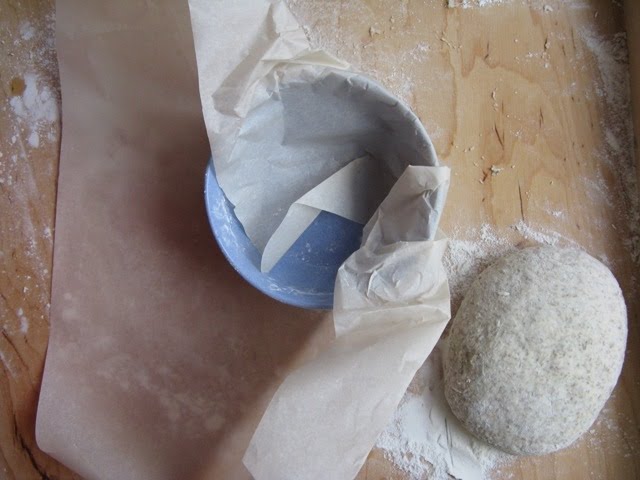
Cut a piece of a parchment paper, place a bowl of the desired bread size in the center and wrap the dish.
Oil the inside of the 'paper bowl' and dust with flour if you prefer. Then carefully remove the bowl and wrap the paper itself into the bowl's shape.
Place the shaped loaves in your paper moulds. Now arrange the moulds on the baking tray leaving some space between separate breads. Cover with a wet cloth and leave for proofing.
Brush or dust the risen bread and cut the top as you do normally.
Admire and enjoy the look and the smell of the ready loaves. Now's the time for taking pictures actually!
No mercy for a single slice!

2010-06-01

Beer soup - a must for a beer lover

As we are talking about the Old Polish (baroque) cuisine it is necessary to mention the beer soup. It was a custom to start a day with this noutritious soup or another in kind of borsch or a soup made of the fermentated rye flour.

The beer soup was extremely popular not only to its distinctive flavour (you know what I mean) but also due to the fact that it supplied the people with vitamins (vitamin B and niacin) that could be hardly achieved within their dull and simple diet. The proteins from the yeasts (contained in beer) supplied them with all the indispensable amino acids. That was so important as the peasants usually don't eat much meat but mainly grains. The gentry ate it with cheese and eggs added. It must be a nice dish especially that many of the nobility were producing their own beer. The habits has changed much since then. The fashion of eating bread for breakfast came from France in the XVIII century and it finally won. We don't eat the nourishing soups in the morning today but commonly we eat sandwiches.

Beer soup with croutons- recipe

500 ml beer
150 g sour cream (18% fat) or double cream
2 egg yolks
2 slices of bread (preferably Russian rye bread)
3 Tbsps sugar
pinch of cinnamon

1. Cut the crust off the slices and cut the crumb into small cubes. Brown the cubes on the dry frying pan.
2. Cut the bead crust into small segments. Keep 2 tablespoons of beer separately. Bring to boil the rest of beer with the crust. Let it become overcooked.
3. In a pot mix the cream with the egg yolks, the cold beer and a tablespoon of sugar.
4. Slowly add the warm beer to the cream, stirring constantly. Place on the stove and heat slowly, stirring. Heat it well but do not boil! (Aha, here you can smell the amazing almond aroma).
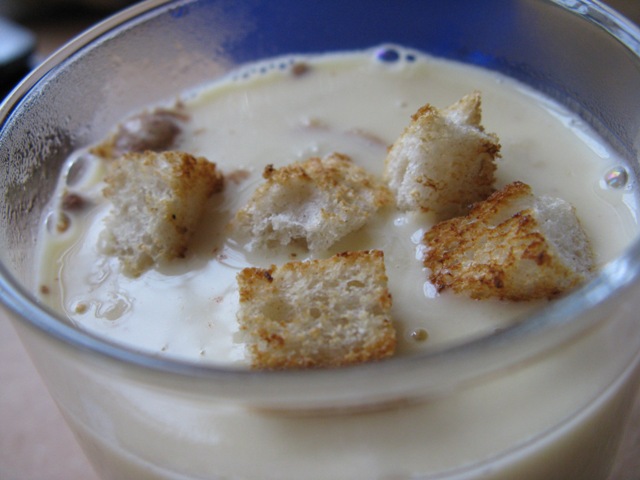
5. In a bowl or a cup place a teaspoon of sugar and a dash of cinnamon. Pour in the soup and sprinkle with the croutons.


Makes 2-4 portions, depends on how you like the soup. I warn, if you use a strong beer, you will get a strong, aromatic, a little bitter soup with this amazing almond aroma. The soup does not become thick but still i can fill you up. Croutons are generally not necessary for that. If you like beer, this soup is really great.

2009-07-06

Bread Holiday in Krakow

It was almost one month ago but that was a memorable experience which I wanted to share with you from the beginning but job kept me away from the computer successfully.

This Bread Holiday (Święto Chleba) takes place in Wolnica Square in Krakow's well known district Kazimierz. This year's edition was held on the 13-14th of June together with the Krakow's semifinal of the fifth Little-Poland Taste Festival (Małopolski Festiwal Smaku). This year Krakow is also celebrating the 750th anniversary of Krakow Bakers' Guild and 100th anniversary of the canonizataion of St Clement, bakers' patron saint.

Certainly this is a place where you can explore the Little Poland cuisine and the variety of regional products and meet the organic producers face to face.There was honey to try, great slimming breads, my favourite smoked cheese oscypek and the grain to grind your own flour!!!

Moreover Polish smoked sausages, hams in herbs, grilled shish and...


But the most of all breads, rolls, knots, Krakow's bagels, pretzels and much more.


Of course there is the competition - you can vote for your favourite breads, products and dishes. Another competition is for kids - shaping in the dough for Krakow bagels.


Regional pottery better than the ancient Greek one, beeswax candels and aboundance of pretzels.


Also you can hear the play of brass bands, regional folk bands and even a rap concert! (Some talks on the matter are also given - in Polish).

Wolnica Square itself is a perfect starting point for a day sightseeing. You can admire the sculpture Fountain of players by Bronislaw Chromy and visit the Ethnograpic Museum for its numerous exhibitions and a special events prepared for the Bread Holiday. Then you can treat yourself in diverse restaurants, take a long walk to discover the Jewish heritage across the district and end up in one of the vibrant cafes.


On the 29-30th of August the final of Little Poland Taste Festival is taking place here, I hope to see you there!!!

P.S. There was also very meaningful exhibition of the few appliances used by bakers over the time. That comes from the museum of bakery in Pleszew in the Great Poland region in the west of Poland. The museum founded by master baker Tomasz Vogt operates from 2006. Must-to-visit!!! And now the contest: what is the machine on the photo? What it was used for? Set of brochures about Little Poland for the lucky winner from any part of the world! Emails to: hilona at wp dot pl.

LinkWithin

Related Posts Plugin for WordPress, Blogger...